
Core Functions and Operational Roles
Storage and Order Fulfillment Workflows
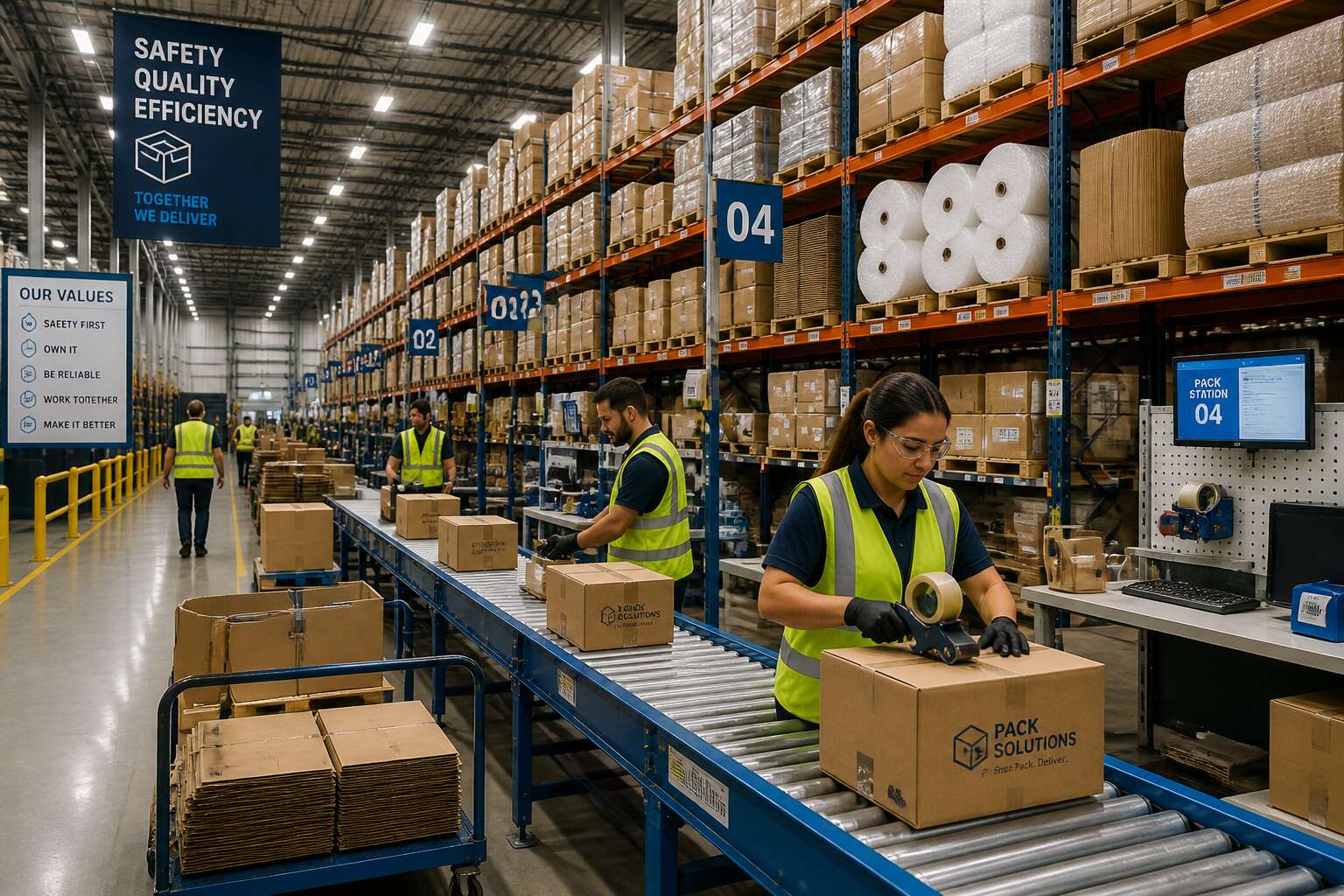
A packaging warehouse lives or dies by its order fulfillment workflow. In my view, storage is passive; it only holds value until someone retrieves it. The operational roles that matter are the ones that turn stored goods into dispatched parcels.
Receiving clerks check deliveries against purchase orders, then direct pallets to designated zones. Pickers travel those zones with handheld scanners, grabbing items in the sequence that minimises travel time. Packers inspect each order, add protective wrapping, and label boxes with shipping information. Inventory controllers run cycle counts and flag discrepancies before they become stockouts.
- Putaway and slotting
- Batch picking and wave picking
- Quality checks at packing stations
- Dispatch scheduling
Every role has a clear owner, yet the workflow only works when communication flows without friction!
Value-Added Services and Customization
In South Africa, only 12% of small brands offer custom packaging, so a packaging warehouse can provide value beyond storage. Value-added services and customization are now core to operational roles. I have seen warehouses gain clients simply by adding a kitting line or a label-verification station.
These services require specific functions:
- Kitting bundles with unique SKUs
- Applying promotional materials and barcode labels
- Inspecting custom orders against customer profiles
Each role, from the kitting supervisor to the quality auditor, must adapt quickly. A warehouse that handles exceptions without friction becomes the partner that brands trust. That is the real value.
Return Handling and Reverse Logistics
Returned goods create a second flow through any packaging warehouse, one that demands its own discipline. Core functions like receiving, put-away, and picking rarely account for the chaos of a box coming back! That is where I see operational roles shift. A returns clerk does more than inspect damage. They verify serial numbers, match items against original orders, and decide whether a product can be restocked or must be written off. In many South African facilities, this role handles up to 15% of daily volume.
Reverse logistics feeds the same infrastructure. Returned stock moves through quarantine zones and quality checks before it can re-enter inventory. A packaging warehouse that manages this loop prevents shrinkage and keeps client claims honest. The key functions include:
- Triaging returned items into restock, refurbish, or discard streams.
- Updating inventory systems with real time status changes.
- Issuing credit notes or replacements within set timeframes.
Designing Efficient Storage Layouts
Pallet Racking Systems and Configurations
A single pallet position can hold up to a tonne, yet the real weight in a packaging warehouse comes from how that space is allocated. Efficient pallet racking systems transform raw square footage into accessible density, especially when handling bulky packaging materials like rolls, cartons, and shrink film. The configuration must match the inventory cycle, not just the available ceiling height. For high turnover items, selective racking offers direct access, while drive-in systems maximise storage for slower moving stock. Consider these common layouts:
– Selective racking for single pallet depth and immediate accessibility
– Drive-in racking for high density with a last-in, first-out flow
– Cantilever racking for long or awkward packaging supplies
Each option shifts the balance between selectivity and cubic utilisation. A packaging warehouse that maps these choices against its actual order patterns will reduce travel time without sacrificing safety. The layout is a silent negotiator between space and speed.
Zone-Based Picking Paths
In any packaging warehouse, the distance a picker walks directly affects operating cost. Studies suggest that travel can consume more than half of all order picking labour. A zone based picking path cuts that distance by design, not by chance.
Divide the floor into logical areas: fast movers near the packing stations, bulky items along the dispatch wall, and seasonal stock in the deeper aisles. Each zone carries its own rhythm. When pickers stay in one area instead of crossing the building, congestion drops and accuracy improves.
- Fast moving SKUs in the front zone
- Heavy or awkward items on ground level
- Slow movers in the upper or rear positions
Batching orders by zone creates a natural flow. A packaging warehouse that sequences picks this way reduces wasted steps and keeps the operation responsive to daily demand shifts.
Dock-to-Stock Flow Optimization
A pallet waiting on the dock costs money every second it sits there. In a packaging warehouse, the gap between arrival and put-away often hides the biggest losses. Dock-to-stock flow optimization starts by mapping the shortest physical path from the truck door to the storage slot. South African facilities face tight space and seasonal surges, so the layout must absorb that pressure without creating cross traffic.
Design the receiving area to feed storage zones in a straight line. Keep fast-moving stock close to the dock, and push slow inventory toward the rear. The key is to eliminate double handling.
- Stage incoming goods directly in the aisle they will be stored in
- Use floor markings to guide forklift routes away from pick paths
- Position inspection stations beside the dock, not after the racking
This approach turns the dock into the brain of the packaging warehouse. When storage layouts respect the flow of goods from the moment they enter, every later step becomes cheaper and faster.
Cross-Docking and Transshipment Areas
In South Africa, floor space is the most expensive asset you do not see on a balance sheet. A packaging warehouse that ignores transshipment zones forces every pallet to travel twice. Cross-docking breaks that pattern by moving goods directly from receiving to outbound staging, bypassing storage altogether. I have seen too many facilities treat this as an afterthought!
Design these areas as a separate loop, away from picking and replenishment traffic. For a packaging warehouse, the rule is simple: transshipment goods should never touch a rack. Instead, give them a dedicated holding lane with clear floor markings.
- Place cross-docking doors opposite each other to shorten travel.
- Use a staging matrix for outbound loads, so trucks load in sequence.
- Reserve the front zone for high-turnover packaging lines.
Transshipment areas work best when they have their own entrance and exit. This keeps the main storage layout stable and predictable.
Critical Equipment and Automation Technologies
Forklifts and Material Handling Machinery
In any packaging warehouse, the forklift rarely gets the credit it deserves. These machines, along with other material handling equipment, determine the pace of everything else. When a forklift stalls, so does the entire operation.
Modern automation has changed how these machines perform. Sensor guided pallet movers and semi-autonomous reach trucks now handle repetitive runs with minimal intervention. In my experience, the most effective warehouses pair human operators with intelligent assist systems rather than replacing them outright.
Key features to evaluate in today’s equipment:
- Lithium-ion powertrains that charge during breaks
- Load weight sensors that prevent tip-overs
- Telematics that flag maintenance before breakdowns
These technologies reduce downtime and protect both product and people. A facility that invests here gains a quieter, safer, and more efficient floor.
Conveyor Systems and Sortation Devices
Every packaging warehouse has one corridor where conveyors run constantly. When that rhythm breaks, the silence announces the problem before any alarm does. Sortation devices read barcodes and dimensions at speed, but their true value appears only when they fail gracefully.
In my experience, recovery time matters more than peak throughput. A conveyor that restarts cleanly outperforms one that races and stutters. Most teams forget this until a seasonal surge exposes the weakness.
Consider what matters:
- Induction speeds that match your inbound volume
- Diverters that handle mixed parcel shapes without crushing
- Diagnostic sensors that observe every pass
These features separate a robust sortation loop from a nightly ordeal. The best packaging warehouse layouts treat conveyors as partners with their own habits and quirks.
Automated Storage and Retrieval Systems
Automated Storage and Retrieval Systems replace wide aisles with dense towers that rise to the ceiling. Machines move vertically and horizontally, pulling totes or pallets without a human stepping into the lane. This changes the packaging warehouse in a fundamental way. The floor becomes quieter. Inventory counts become live facts instead of weekly guesses. Error recovery happens in software, not in forklift traffic.
Consider what a system should deliver:
– Storage density that matches your SKU profile
– Retrieval cycles that sync with picking schedules
– Software that predicts where demand will appear
South African operations, especially those handling fast moving consumer goods, see payback in reduced labour and fewer damaged cartons. A packaging warehouse that adopts AS/RS holds its accuracy during peak season.
Warehouse Management System Integration
A packaging warehouse runs on coordination. The warehouse management system is the central intelligence that synchronizes every automated device, from sortation arms to robotic palletizers. Without integration, machinery operates in isolation.
I have watched South African facilities shift when the WMS speaks directly to their equipment. Real time data replaces manual handoffs. The system knows which conveyor carries which carton and adjusts priorities without human prompting. This integration layer also captures the exceptions: the mis-scanned barcode, the delayed truck, the sudden stock shortage.
Critical integration points include:
– Machine level communication via OPC UA or MQTT
– Middleware that translates protocols between legacy and new systems
– Cloud based dashboards for live visibility across sites
The packaging warehouse that connects these layers gains an operational memory. It learns from every cycle and refines its own rhythms!
Barcode and RFID Tracking Tools
Die Identität eines Kartons entscheidet über sein Schicksal. In einem packaging warehouse kann ein einziger falsch gelesener Barcode eine Sendung in die falsche Stadt schicken. Barcode- und RFID-Tracking-Tools sind die stillen Wächter dieser Ordnung. Sie lesen, was das menschliche Auge übersieht, und melden jede Abweichung.
In südafrikanischen Betrieben beobachte ich, wie RFID-Tore an jedem Durchgang die Bewegung von Paletten registrieren, ohne dass ein Scanner die Hand hebt. Barcode-Leser an Packstationen verknüpfen jede Einheit mit ihrem Auftrag. Diese Technologien arbeiten im Schatten automatisierter Systeme und verhindern, dass sich Fehler ausbreiten.
Die Werkzeuge selbst sind vielfältig:
- Handheld-Scanner für die Inventur
- UHF-RFID-Lesegeräte an Förderbändern
- Drucker für haltbare Etiketten
- Mobile Terminals mit integrierten Kameras
Jedes Gerät trägt dazu bei, dass ein packaging warehouse die Kontrolle behält. Datenströme fließen in Echtzeit und entlarven jeden Fehler, bevor er sich ausbreitet. In einer Umgebung, in der Sekunden über Termine entscheiden, ist diese Wachsamkeit unverzichtbar.
Inventory Accuracy and Control Strategies
Cycle Counting and Auditing Methods
Inaccurate inventory costs South African distributors more than they realize. A single misplaced pallet can unravel an entire week of dispatch planning. That is why cycle counting has become the core control method inside a modern packaging warehouse.
Instead of shutting down operations for a full stocktake, teams verify small subsets daily. This approach catches discrepancies early and keeps the packaging warehouse responsive to client demands.
- Control group counting focuses on high-value or fast-moving items
- Random sampling selects locations without bias
- Periodic counting follows a fixed schedule for every SKU
Auditing methods add another layer. Independent auditors compare physical counts against system records, revealing process gaps that routine checks miss. These audits ensure every box and roll is where it should be.
Demand Forecasting and Stock Replenishment
Counts reveal what exists, not what is needed next week. A packaging warehouse can be perfectly accurate and still fail when demand shifts without warning. Forecasting changes that. It turns historical data and client order patterns into a forward-looking picture of what should be on the shelves.
In my experience, good forecasting blends a few approaches:
- Moving averages smooth out random weekly ripples
- Trend analysis catches slow changes in packaging consumption
- Client conversations reveal upcoming projects before official orders arrive
Once forecasts are set, replenishment becomes mechanical. Each SKU gets a reorder point tied to lead time and usage speed. In South Africa, where imported materials face port delays, those lead times deserve extra scrutiny. Safety stock absorbs the disruption when a supplier stumbles or a client suddenly doubles their order. The result is a packaging warehouse that holds enough stock to satisfy demand without tying up capital in boxes that just sit there.
Lot Tracking and Expiration Management
Inventory accuracy in a packaging warehouse depends on more than a clean spreadsheet. It starts with lot tracking, where each delivery receives a unique code tied to its production date. This matters for materials with finite shelf life, including shrink wrap and adhesive tapes. Expiration management turns that data into action, preventing the dispatch of degraded goods. South African import delays make this especially relevant, since time in transit erodes useful life before stock arrives.
Common controls include:
– Physical reconciliations after each shift
– Release oldest batches first
– Automatic alerts for lots nearing expiry
These strategies keep errors from compounding. A packaging warehouse that masters them can trace any failure back to its origin. My own experience shows that cycle counts work best when paired with lot records. That combination produces accuracy which feels effortless, though it never is.
Slotting Optimization for Fast Movers
Fast movers in a packaging warehouse deserve more than a convenient shelf. They require a slot that balances gravity, reach, and replenishment frequency. When a high velocity item sits too far from the packing station, every order carries hidden seconds. Those seconds compound across shifts. Slotting optimization fixes this by placing fast movers in golden zones, the area between knee and shoulder height.
- High velocity stock has priority near packing stations
- Replenishment inventory sits adjacent to the picking face
- Seasonal items shift position as forecasts change
Slower stock moves to lower or higher bays, where its slower turnover makes retrieval time less critical. Inventory accuracy improves when slotting aligns with actual demand patterns. Recalibrating slot assignments monthly prevents the drift that creates ghost stock.
Real-Time Data Synchronization
Inventory accuracy in a packaging warehouse is a fragile pact between what the system believes and what the shelf actually holds. Real-time data synchronization keeps that pact from breaking. When a picker scans a bin, the stock ledger updates immediately. No end of day batches. No silent drift between counts.
South African operators face unique pressure here. Load shedding and transport delays punish anyone working with stale data. Synchronized information lets you see the floor as it exists right now, not as it existed yesterday.
- Stock movements from picking and packing
- Returns and adjustments from the floor
- Receipts arriving at the dock
All of it flows into one source of truth the moment it happens. That consistency builds quiet confidence. And confidence in a packaging warehouse keeps every subsequent decision grounded in reality.
Safety, Sustainability, and Workforce Training
OSHA Compliance and Hazard Prevention
In a packaging warehouse, safety determines whether workers return home intact. That reality shapes every decision we make. We integrate sustainability into daily operations, reducing waste and energy use without compromising protection. Training programs focus on hazard prevention, teaching staff to spot risks before they escalate. OSHA compliance is our baseline, yet we push beyond checklists to build genuine awareness!
- Daily equipment inspections
- Clear spill response protocols
- Proper lifting techniques
- Emergency evacuation drills
Sustainability and safety align when we design workflows that minimize repetitive strain and material waste. Each employee receives scenario based training that addresses real conditions, from conveyor jams to chemical exposure. Our packaging warehouse operates on the principle that prevention is cheaper than correction, and that a protected team is a productive team.
Ergonomic Workstation Design
A third of workplace absences in South African logistics stem from musculoskeletal strain. Our packaging warehouse counters that statistic through deliberate ergonomic design. Workstations adjust to each worker’s height, reducing strain during eight hour shifts. We position tools within a natural reach radius, eliminating unnecessary twisting and bending.
Training reinforces these design choices. Every employee learns to calibrate their station for their body type. We rotate tasks every two hours, distributing physical load across muscle groups. This approach protects the team and extends equipment life!
Daily ergonomic checks include:
- Monitor height at eye level
- Wrist rests positioned for neutral posture
- Foot supports for shorter workers
Sustainability emerges from the same principles. Proper posture means fewer errors, less rework, and lower material consumption. Our packaging warehouse measures ergonomic performance alongside energy use, treating worker wellbeing as an environmental metric.
Eco-Friendly Packaging Materials and Waste Reduction
Forty percent of municipal waste in South Africa comes from packaging. That statistic drives our approach! We treat safety and sustainability as one system, not two goals.
Our training program teaches workers to sort materials at the source. Every shift includes a quick audit of recycling bins. We use eco-friendly packaging materials like cornstarch peanuts and recycled paper void fill. These alternatives reduce landfill pressure and inhalation risks from traditional styrofoam.
Waste reduction starts with accurate cutting. Workers score boxes to the millimetre, minimising offcuts. We also run a return program for pallet wrap.
- Daily bin contamination checks
- Monthly waste weight targets
- Quarterly refresher courses on material handling
The result is a packaging warehouse where careful hands and careful minds produce less waste. Better, safer operations use fewer resources. That is the simplest equation we know.
Employee Cross-Training and Productivity
Safety and sustainability live in the same habits. When workers rotate through different stations, they notice risks and waste patterns that a fixed routine hides. Cross-training gives workers fresh perspectives that support daily safety audits.
In a packaging warehouse, flexibility matters. Workers who understand receiving and dispatch can shift where pressure builds. They also carry that knowledge into material handling checks.
Our cross-training schedule pairs experienced staff with newer hands. Every rotation covers emergency procedures and waste sorting rules. That builds productivity without sacrificing caution. We track these numbers:
- Rotation completion rates
- Incident reports per station
- Time to fill absent shifts
These figures show how training pays off. A safer packaging warehouse is a more productive one, and it keeps sustainability goals within reach.



0 Comments