
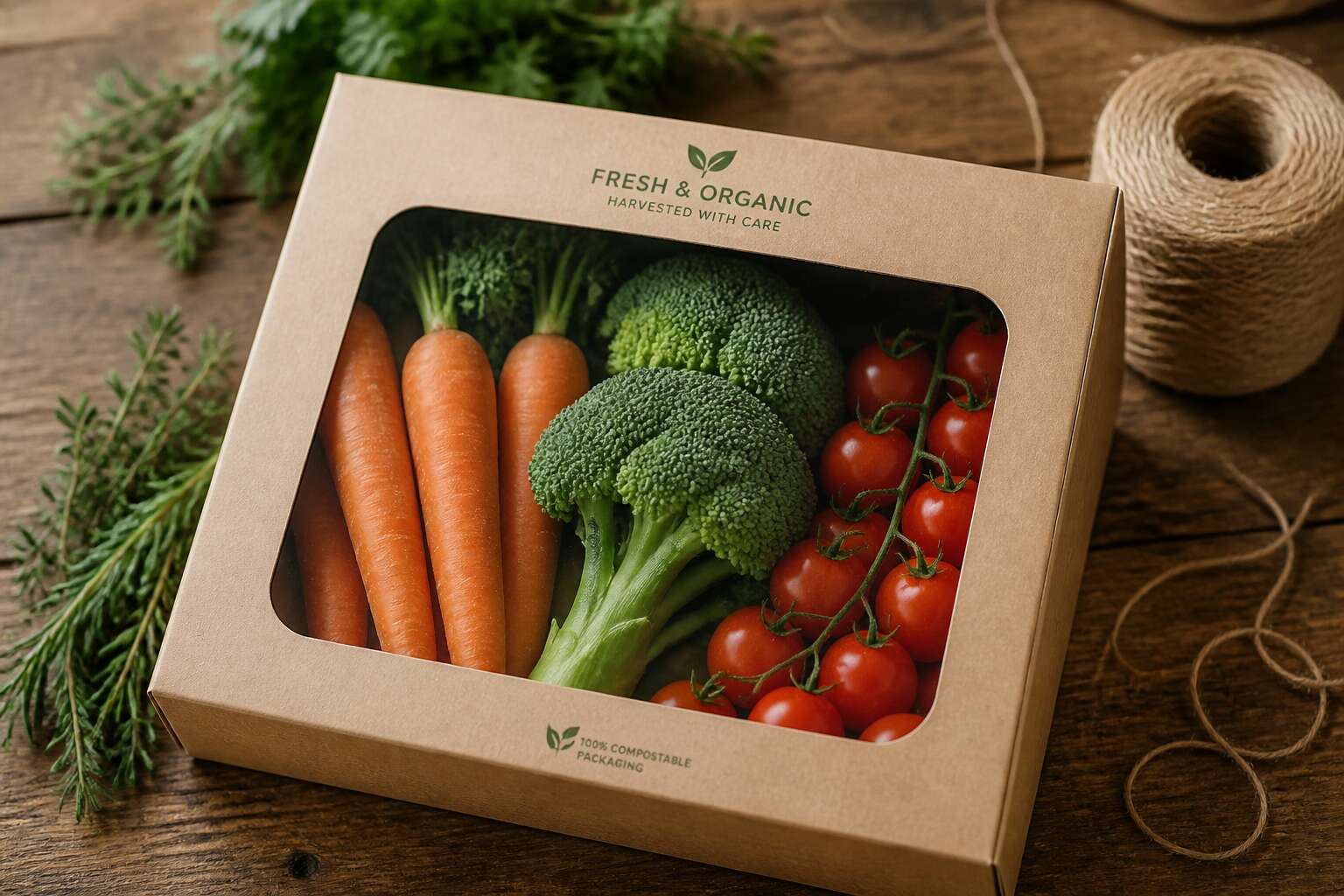
Sustainable Materials for Fresh Produce
Biodegradable Films and Compostable Wraps
South Africa generates roughly 2.3 million tonnes of plastic waste annually, and produce packaging carries a hefty share of that burden. Biodegradable films derived from cassava starch and seaweed extract now give retailers a genuine alternative. They decompose in industrial composters within 90 days.
Compostable wraps made from sugarcane bagasse deserve equal attention. This byproduct of local sugar milling becomes moisture resistant sheeting that keeps baby spinach crisp and button mushrooms dry. In humidity trials, these wraps extended shelf life beyond what conventional PVC film could manage.
Here is what separates these materials:
- 60% lower energy input during production compared to standard cling film
- Stable performance between 4°C and 40°C without premature degradation
- Controlled moisture transmission that adds up to three days of freshness
These vegetable packaging ideas are already on shelves at leading Cape Town and Durban retail chains!
Reusable Mesh Bags and Produce Sacks
Every week, South African households carry home an average of 24 single use plastic bags from fresh produce counters. Reusable mesh bags and produce sacks are the practical alternative to that habit. These vegetable packaging ideas use breathable netting to keep spinach airy and tomatoes firm, while eliminating the need for a new plastic bag each trip.
The material is simple. Knitted cotton or recycled polyester forms a sack that holds up to 8 kilograms of produce. It rinses clean in seconds and folds into a pocket when empty!
- Moisture wicking weave that prevents soggy greens
- Reinforced seams that survive weekly market hauls
- Clear labelling windows for fast till scanning
Retailers from Woolworths to independent greengrocers are stocking these sacks near the loose produce. The price is low. The durability is high. For shoppers looking for practical vegetable packaging ideas, this is the quiet answer.
Recycled Cardboard and Paper Trays
Meanwhile, on the lower shelves of the produce section, the recycled cardboard tray is having a quiet renaissance. Here is a truth that will shock no one: these trays have held produce for decades, but few shoppers give them a second glance. We have given them a refresh! Recycled cardboard and paper trays now cradle everything from baby marrow to organic strawberries with a quiet certainty that appeals to shoppers who value function over flash.
The material science is straightforward. Post-consumer paper is pulped, pressed, and moulded into trays that absorb impact and wick away moisture. No plastic lining. No chemical coating. Just dense, fibrous architecture that keeps aubergines from bruising during the bumpy commute from farm to city. The cost per unit is low, and that saving appears on your till slip.
What makes these trays a strong addition to any list of vegetable packaging ideas is their behaviour at the end of the day. A cardboard tray does not linger in a landfill for three centuries. It breaks down in a compost heap within weeks. It can be recycled repeatedly before the fibres give up.
- Moulded trays for soft fruit and berries
- Corrugated liners for root vegetables like beetroot and carrots
- Perforated paper punnets for mushrooms and cherry tomatoes
South African retailers are taking notice. Checkers and Pick n Pay have adopted these trays for house-brand lines, and farmers markets use them for free-range eggs and heirloom tomatoes. The packaging holds its weight, protects delicate produce through the supply chain, and then disappears without ceremony. That is the kind of performance that does not need a slogan.
Edible Coatings Made from Plant Extracts
An estimated one third of fresh produce never reaches a plate, and much of that loss happens in the few days after harvest. A cucumber wrapped in a film derived from its own peel sounds like a parlor trick, yet edible coatings are now a serious option within vegetable packaging ideas for South African growers.
These coatings use plant extracts such as carnauba wax, aloe vera gel, and essential oils from oregano or thyme. Applied as a thin layer, they slow moisture loss and restrict oxygen exchange, which delays ripening without altering taste. In my view, this approach offers a quieter alternative to plastic shrink wrap. The coating is consumed with the produce or washed off, leaving no waste stream behind.
Common applications include:
- Citrus fruits treated with beeswax to retain shine and firmness
- Avocados coated with chitosan to reduce fungal decay
- Leafy greens sprayed with a protein-based emulsion to maintain crispness
Beeswax Wraps for Farm-to-Table Retail
At a bustling Johannesburg farmers market, the difference between wilted spinach and crisp leaves often comes down to what the vendor wraps them in. Beeswax wraps are making a quiet entrance into South African farm-to-table retail. These cloth sheets, infused with beeswax and jojoba oil, mould to the contours of a cucumber or a bunch of carrots. They breathe. That breathability keeps condensation away, and condensation is what turns crisp leaves limp.
I have seen smallholders adopt this material because it holds up through repeated use:
- It lasts for a year with proper care.
- It replaces single-use plastic in the crate and on the shelf.
- Buyers return the wraps at the next market day, and the cycle continues.
The tactile feel of beeswax against the skin signals freshness without cling film. For anyone weighing vegetable packaging ideas, this wrap stands apart for its quiet durability.
Maximizing Shelf Life with Smart Containers
Perforated Clamshells for Moisture Control
Condensation is the quiet killer of fresh produce. One humid afternoon can transform crisp greens into a slimy mess. Perforated clamshells disrupt this cycle by letting excess moisture escape while holding just enough humidity for survival.
These smart containers use engineered airflow to keep spinach, blueberries, and cut butternut in equilibrium. The holes are not random; they match the transpiration rate of each crop. For South African retailers exploring vegetable packaging ideas, this is a direct solution to the moisture puzzle.
- Baby spinach stays crisp for five extra days
- Strawberries resist mould growth
- Broccoli heads hold their deep green colour
Water vapor builds up inside a sealed box, then settles on the leaves. Perforations break that chain. Retailers in Johannesburg and Cape Town are adopting these clamshells because they cut markdowns and keep produce looking alive on the shelf.
Breathable Baskets for Root Vegetables
Nearly 30% of root vegetables rot before reaching the consumer, a casualty of trapped ethylene gas and surface moisture. Breathable baskets disrupt this loss by letting air circulate around every tuber. I have watched potato suppliers in the Western Cape switch to ventilated crates and cut their spoilage rates in half within one season. That is a measurable difference!
These containers use vertical airflow channels rather than random perforations. The geometry mimics traditional open weave storage, but with modern stacking efficiency. Onions, carrots, and beetroot all benefit because they respire after harvest and demand constant gas exchange.
- Prevents soft rot from surface moisture
- Slows sprouting in potatoes and onions
- Keeps carrots firm without condensation
For retailers exploring vegetable packaging ideas, breathable baskets offer a durable alternative to single-use plastics. These vegetable packaging ideas treat airflow as the primary preservation mechanism. The baskets endure hundreds of supply chain trips, functioning as a structural investment rather than a disposable expense.
Vacuum-Sealed Pouches for Leafy Greens
Vacuum sealed pouches rank among the most effective vegetable packaging ideas for leafy greens. In South Africa, where summer heat accelerates wilting, they can extend freshness from three days to nearly two weeks. The absence of oxygen suppresses aerobic bacteria and enzymatic browning.
Spinach, rocket, and baby kale respond well to low pressure packing. The pouches collapse tightly around leaves, preventing bruising during transit. Unlike mesh or paper, they create a hermetic seal that locks in moisture without condensation.
- Reduced oxidation keeps leaves vibrant.
- Lower respiration rates delay yellowing.
- Compact packaging cuts transport volume.
Ethylene-Absorbing Bags for Ripening Management
South African avocado exporters lose nearly a fifth of their harvest to premature ripening during road freight. Ethylene absorbing bags intercept the gas that triggers this process, slowing the ripening of climacteric fruit. Tomatoes, peaches, and bananas respond well to these sachet lined packages.
The bags work with smart containers that regulate gas exchange through micro perforations. Unlike passive wraps, these vessels adjust their permeability as the fruit respires, maintaining a steady state. Johannesburg stores use them to keep stone fruit market ready for an extra week.
- Avocados
- Peaches
- Tomatoes
These vegetable packaging ideas shift the retailer’s role from reactive to deliberate. The results are measurable.
Creative and Functional Wrapping Techniques
Twist-Tie Bunches with Kraft Paper Accents
Somewhere in your kitchen, a drawer full of twist ties waits for redemption. They are useful tools in vegetable packaging ideas. Bunch fresh herbs or baby leeks, secure them with a twist tie, and you create an instant visual rhythm. Add a kraft paper accent, a folded band or a small tag, and the bundle becomes a deliberate statement. The paper can carry the farm name, a harvest date, or a cheeky cooking tip. It gives customers something to hold without bruising leaves. Great for asparagus, kale, and spring onions.
Practical touches for vegetable packaging ideas include:
- Unbleached kraft paper for natural texture.
- The price per bunch written on the tag.
- A rubber band as backup when the twist tie feels flimsy.
Kraft paper and twist ties cost nothing, which makes them a favourite among market sellers. They keep produce visible, breathable, easy to handle while reducing plastic waste.
Furoshiki-Inspired Fabric Wrapping
Furoshiki-inspired fabric wrapping turns a simple bunch of spinach into a gift. The technique uses a square of cloth, often cotton or linen, tied around produce so that air circulates freely while the bundle stays secure. The fabric moulds to the shape of the vegetables, which means no wasted space in a market stall or a refrigerator.
These wraps belong to a wider family of reusable vegetable packaging ideas. Shoppers return the cloth on their next visit, and sellers wash and reuse each piece many times. The fabric shields delicate items like heirloom tomatoes without trapping moisture. A shelf of colourful furoshiki bundles catches the eye in ways that plastic and cardboard cannot.
Common fabric choices include lightweight cotton for herbs, breathable linen for root vegetables, and smooth silk for premium display pieces.
Shrink-Sleeve Bundles for Multi-Packs
Retailers across South Africa are turning to shrink sleeves when they bundle vegetables into multi packs. A heat activated film tightens around three or four avocados, creating a single unit that shoppers can lift from the shelf without hunting for loose items. I have watched cashiers scan these bundles in seconds. Among vegetable packaging ideas, this one delivers speed and security at the point of sale.
The sleeve performs several jobs at once:
- It holds uneven shapes together without bruising
- It lets customers assess ripeness through the transparent film
- It carries barcodes and branding without extra labels
- It discourages shoppers from swapping items between packs
Each bundle cuts checkout time because the cashier scans one code instead of several. The film also keeps produce from rolling across display tables, which reduces waste and keeps the floor clean.
Punnets with Perforated Lidding Films
In the Western Cape, berry farmers have a quiet obsession with airflow. Punnets with perforated lidding films allow strawberries to breathe while shielding them from careless fingers. The small holes regulate humidity inside each container, preventing the condensation that softens fruit and invites mould. These vegetable packaging ideas suit delicate crops where presentation matters as much as protection.
- Consistent ventilation across the entire punnet
- Clear visibility for quality inspection
- Reduced moisture buildup that causes spoilage
- Secure closure for stacking during transport
I have watched shoppers lift a punnet, tilt it toward the light, and inspect every berry without breaking the seal. The film holds everything in place, so fruit arrives home looking as good as it left the farm. When produce looks this fresh, the choice becomes obvious. What a difference a few tiny holes can make!
Tear-Away Strips for Easy Opening
There is a quiet satisfaction in the way a package opens. Tear-away strips are the everyday hero of the produce aisle, offering handling convenience that shoppers notice immediately. This method uses a perforated seam that splits cleanly along a printed line, giving access without the need for scissors or a knife. For bundles of baby spinach or green beans, this feature means the difference between a swift pour into a pan and a frustrating struggle. It allows the consumer to open the pack exactly as intended, preserving the integrity of the produce inside.
The design supports a swift, clean tear that avoids bruising leaves or crushing tender stems. These strips also offer a partial open option, letting shoppers peel back just a corner to smell the herbs or gauge the crispness of the vegetables. When the seal is broken, it does not compromise the whole bag, allowing for the remaining contents to stay protected.
- No extra tools required to access the contents
- Controlled opening reduces the risk of product damage
- Resealable options extend the freshness window at home
I recall watching a small farmer pack his green beans into these exact bags, pressing the strip flat with a practised thumb. He explained that the convenience was the entire point. It is a simple addition that respects the shopper’s time. It is a functional part of the design, not an afterthought. For any brand looking to improve the user experience, these vegetable packaging ideas deliver a tangible sense of care that people remember at the checkout counter. The magic is in the mechanics, and the payoff is in the ease of use.
Nested Packaging for Compact Display
A single shelf face can hold nearly double the produce when packages nest inside one another. These vegetable packaging ideas transform flat displays into layered towers. Small punnets of cherry tomatoes slot into a base tray, while a top tier cradles baby marrows. The stacking pattern creates stability.
Nested designs reduce transport bulk by up to a third. They also create a sense of abundance. Shoppers see depth, not flat rows. In South African retail spaces, where cold chain logistics dominate costs, this compactness matters. I have seen this approach turn a cramped corner into a proper display!
Consider the modular approach:
- Stackable bases with interlocking rims
- Tiered inserts that lock without adhesives
- Outer sleeves that unify multiple nests
Each layer holds firm, yet separates cleanly for home storage.
Labeling and Branding on Vegetable Packaging
Laser Etching Directly on Produce Skin
Laser etching removes the physical label from the equation entirely. A concentrated beam of light carves a microscopic layer of pigment off a butternut’s skin, leaving a crisp, permanent mark that never peels or smudges. I have watched South African citrus packhouses adopt this technique to bypass plastic tags altogether, one of the more arresting vegetable packaging ideas to emerge from the export sector in years.
The method has real limits. Thin-skinned produce can scar, and the laser equipment is expensive. Yet for robust crops like sweet potatoes, onions, and avocados, the payoff is a fully traceable product that enters the waste stream with nothing to discard. Among vegetable packaging ideas, this one stands apart for its absolute permanence.
- No adhesives touch the edible surface
- Marks survive the condensation of cold storage
- Origin and cultivar data are etched directly on the rind
Sticky Notes and Chalkboard Tags for Farmers Markets
Labeling on vegetable packaging often determines how quickly a shopper reaches for a product. Sticky notes offer a handwritten charm that feels immediate and honest, while chalkboard tags let vendors swap details like price or harvest time in seconds. These small surfaces carry weight when the farm name, variety, and picking date are visible at a glance.
The beauty of chalkboard tags is their reusability. A single board can serve a whole season, wiped clean for each Saturday market.
– Sticky notes suit delicate items like salad greens where tape damages leaves
– Chalkboard tags work for robust produce such as butternut or potatoes
– Both eliminate the need for printed plastic labels
Among vegetable packaging ideas, these low-tech tools stand out for their flexibility. They turn packaging into a conversation starter, giving shoppers a direct line to the grower’s story without extra waste.
QR Code Labels Linking to Recipe and Storage Tips
QR code labels let a shopper scan a pack of vegetables and open a page of recipes and storage advice. A buyer in Cape Town can scan baby spinach and find a weeknight curry recipe or guidance on keeping the leaves crisp. These labels work best when they hold genuinely useful information, like the harvest date or the ideal fridge drawer.
The real strength of QR codes lies in their adaptability. A single label design serves every crop in a season. The grower updates the link once, and every pack reflects the change instantly. No reprinting, no wasted packaging. Among vegetable packaging ideas, this one stands out for its low cost and high return.
Consider adding these details to a QR code label:
– A washing guide for leafy greens
– A storage tip, such as keeping potatoes in a dark cupboard
– A simple recipe using two ingredients


0 Comments