
Materials and Construction in Packaging Films
Film substrates and polymers used in modern packaging
More than half of all consumer goods rely on flexible packaging to keep products fresh and ship-ready. Film substrates set the stage: polymers strike a balance between clarity, strength, and heat-seal performance. In modern packaging, PET, PE, and polypropylene mingle in clever, multilayer films, while barrier specialists tune aroma and moisture control. For the South African market, this construction also weighs sustainability and supply-chain resilience into every crisp, coated surface!
- PET (polyethylene terephthalate)
- PE (polyethylene)
- BOPP (biaxially oriented polypropylene)
- CPP (cast polypropylene)
- Nylon/PA
Construction extends across coatings, print layers, and sealant layers that lock in freshness without sacrificing recyclability. EVOH and PVDC barrier films, metallization for shine, and tie layers create durable packaging that travels well across Africa’s diverse climates.
Barrier properties and shelf-life implications
Across South Africa, more than 60% of consumer goods rely on flexible packaging to keep products fresh and ship-ready! This quiet guardian rests on sophisticated constructions where barrier films and metallization meet precision coatings to guard aroma, moisture, and light. By tuning oxygen transmission and sealing performance, these layers extend shelf life without sacrificing recyclability.
Key barrier prowess includes:
- Oxygen and aroma control through EVOH and PVDC
- Moisture management that resists climate swings
- Light and mechanical protection for transit resilience
Coatings and tie layers knit durability with recyclability, ensuring that the crisp surface remains inviting long after leaving the shelf—an ode to longevity.
Lamination, coating, and extrusion methods
Across South Africa, more than 60% of consumer goods ride on flexible packaging, a quiet architect of freshness and form. The construction reads like a careful symphony—core films, tie layers, and coatings harmonizing durability with tactile appeal.
Lamination paths define how a package behaves in real life. Extrusion lamination fuses films in a single, continuous embrace; solventless routes cut solvents from the equation; solvent-based methods offer rapid line speeds. Co-extrusion braids multiple layers into a single film.
- Extrusion lamination bonds films in a continuous process, delivering strong yet flexible composites
- Solventless adhesion minimizes solvent use and supports recyclability
- Coating and extrusion coating tailor surface energy for printability and seal integrity
Coatings and tie layers knit durability with recyclability, letting the crisp surface endure transit and handling, while preserving finish and feel.
End-of-life considerations and recyclability
Across South Africa, plastics recycling remains a single-digit affair, a sobering statistic that makes every packaging decision a vote for the future. In this arena, materials and construction—the film, tie layers, and sealants—decide if a package can reenter the circular stream or linger as waste. Flexible packaging, light on weight yet strong in function, must marry durability with recyclability to keep freshness and landfills in check.
Design choices that tilt the scale toward recyclability include:
- monomaterial architectures to ease sorting
- adhesives and coatings compatible with local streams
- minimized multilayers that block feedstock recovery
Material choices must align with SA’s recycling framework and producer responsibility schemes. When end-of-life considerations meet the initial build—barrier layers, inks, and clear labeling—this packaging steps into the cycle rather than into the waste. This synergy preserves value from factory floor to curb.
Manufacturing Workflows and Processing
Extrusion, coating, and lamination processes
Reels hum with patient intensity, and in this plant every micron counts. Global demand for flexible packaging climbs about 4% annually, turning precision into profit. “Every micron matters,” the supervisor murmurs, and the line answers with flawless alignment as film threads glide toward the winder.
Manufacturing workflows for extrusion, coating, and lamination unfold as a carefully timed sequence. Resin blends melt into film; surfaces are conditioned to accept coatings; bonding layers fuse substrates into sturdy, transparent structures. In South Africa, climate and logistics test every run, while inline checks guard against drift and preserve barrier balance.
Key workflow milestones:
- Resin blending and melt extrusion
- Surface conditioning and coating application
- Lamination and bonding of multilayer structures
Converting technology and line optimization
In a South African plant where space and speed share a delicate balance, every micron counts. Productivity climbs about 4% year after year, and the line hums with a rhythm that prizes precision over bravado. “Every micron matters,” the supervisor murmurs, and the crew nods in lockstep.
Manufacturing workflows—moving from resin blends to melt extrusion, surface conditioning, coating application, and lamination—rely on a tight cadence and constant vigilance. Inline checks guard drift; climate and logistics test each run; bonding layers fuse substrates in a durable, transparent stack. The approach rests on a few levers:
- real-time inline quality checks
- adaptive web tension and servo-controlled rolls
- precise coating weight and adhesion control
Line optimization grows from smart changeovers and data-driven scheduling. In SA, converting technology must blend speed with integrity, delivering stable barrier performance while keeping waste low. For flexible packaging, the sector relies on a steady backbone of precision, efficiency, and dependable performance.
Quality control, inline metrology, and defect reduction
One micron saved per pass translates to a measurable lift in output—and a South African line proves it daily. In flexible packaging, manufacturing workflows hinge on tight quality control, real-time insight, and a calm cadence that keeps drift at bay. Inline metrology checks thickness, coat weight, and surface uniformity as the web travels, while defect reduction programs catch anomalies before they become waste. Every batch edges toward consistency, even when climate and logistics test each run.
Key enablers include:
- inline metrology for thickness, coat weight, and adhesion variation
- defect tracking and rapid root-cause analysis
- adaptive feedback that tunes web tension and coating parameters in real time
In flexible packaging, these practices translate to consistent quality and reduced waste, delivering dependable performance.
Automation and data-driven manufacturing
Factories run on data—and fast! In South Africa, plants that rely on real-time signals cut waste by up to 20% and push throughput higher. That precision matters in flexible packaging, where a calm cadence keeps drift at bay and schedules intact.
Manufacturing workflows and processing automation stitch planning, production, and quality into one continuous rhythm. Data-driven manufacturing turns every shift into a learning loop, with real-time visibility guiding setup, changeovers, and parameter tuning. The result is steadier performance and dependable output.
- Real-time line visibility across stages
- Automated scheduling and changeover optimization
- Predictive maintenance and drift mitigation
That approach aligns with the needs of South African manufacturers, delivering consistent quality and reduced waste—without slowing down the line.
Safety, regulatory compliance, and worker training
Safety is not a bolt-on feature; it’s the tempo that keeps people whole and products reliable. The workflows and processing safety discipline interweave production planning with hazard analysis, so every batch of flexible packaging moves with calm. Compliance isn’t a cage but guardrails—ISO 45001, ISO 9001, ISO 14001, and ISO 22000 assurances that South Africa’s shelves reward with trust. Training becomes a living protocol, and audits become chances to learn.
Key elements include:
- Structured risk assessments and clear safe operating procedures
- Regulatory documentation aligned with NRCS/SABS expectations
- Competency-based training and ongoing refreshers
When safety and compliance rise, morale and throughput follow; the human factor remains the quiet governor of quality in this field.
Sustainability, Recycling, and Regulation
Life cycle assessment and environmental impact
Global demand for sustainable packaging is projected to grow by more than 7% annually, a tide that reshapes every decision in flexible packaging. In South Africa, brands weave design with stewardship, treating packaging as a guardian of resources rather than a disposable afterthought.
Life-cycle assessment reveals environmental impact across stages—from raw materials and production to end-of-life outcomes. The aim is to reduce energy use, water intensity, and emissions while preserving protection and shelf life.
- Material choice and post-consumer fate
- Energy and water use in manufacturing and transport
- Regulatory landscape and reporting obligations in South Africa
This is a story where sustainability, recycling, and regulation act as stars guiding the craft of packaging; when those forces align, the footprint of this journey is gentler, and the silhouette of flexible packaging stands as both art and shield!
Recycling streams, recyclability metrics, and circular economy
Flexibility and conscience go hand in hand. In South Africa, the journey toward sustainable packaging is led by recycling streams, clear metrics, and tight regulation. The goal isn’t mere disposal—it’s safeguarding resources and extending shelf life through smarter design and responsible end-of-life choices. Flexible packaging sits at the heart of that shift.
Recyclability metrics quantify how much of the material can be recovered, how clean the stream remains, and the energy needed in sorting. Circular economy thinking connects design decisions with post-consumer fate, keeping flexible packaging in the loop rather than in the waste bin.
- household and business recycling streams
- post-consumer drop-off and material recovery facilities
- quality metrics and contamination control
Regulatory frameworks, reporting obligations, and industry stewardship shape every run of material. When sustainability, recycling, and regulation align, the footprint of flexible packaging becomes gentler, and the silhouette remains art and shield!
Standards, certifications, and regional regulations
Across South Africa, sustainability is not a rumor but a discipline. A recent snapshot hints that less than 30% of plastic packaging enters formal recycling, a stark reminder that recovery is earned, not given. In this dimly lit landscape, design must be cunning and deliberate.
Regulatory frameworks, reporting obligations, and industry stewardship shape every run of material. Certifications and regional rules guide producers toward transparency, accountability, and extended producer responsibility. This is where flexible packaging finds its measure—crafted to meet South Africa’s Waste Act, Plastic Pact SA commitments, and DEFF oversight while pursuing lower footprints.
- Regulatory standards and licensing
- Certifications such as ISO 14001 and SABS marks
- Regional EPR schemes and reporting obligations
The intersection of sustainability, recycling, and regulation becomes a living sculpture—gothic, precise, and practical.
Market Trends, Applications, and Design
Market segments and growth drivers
Across South Africa and beyond, flexible packaging is redefining shelf strategy. Global demand is rising faster than rigid formats, with annual gains around 3–4%. Brands pursue compact, vibrant designs that protect freshness on a journey from store to home!
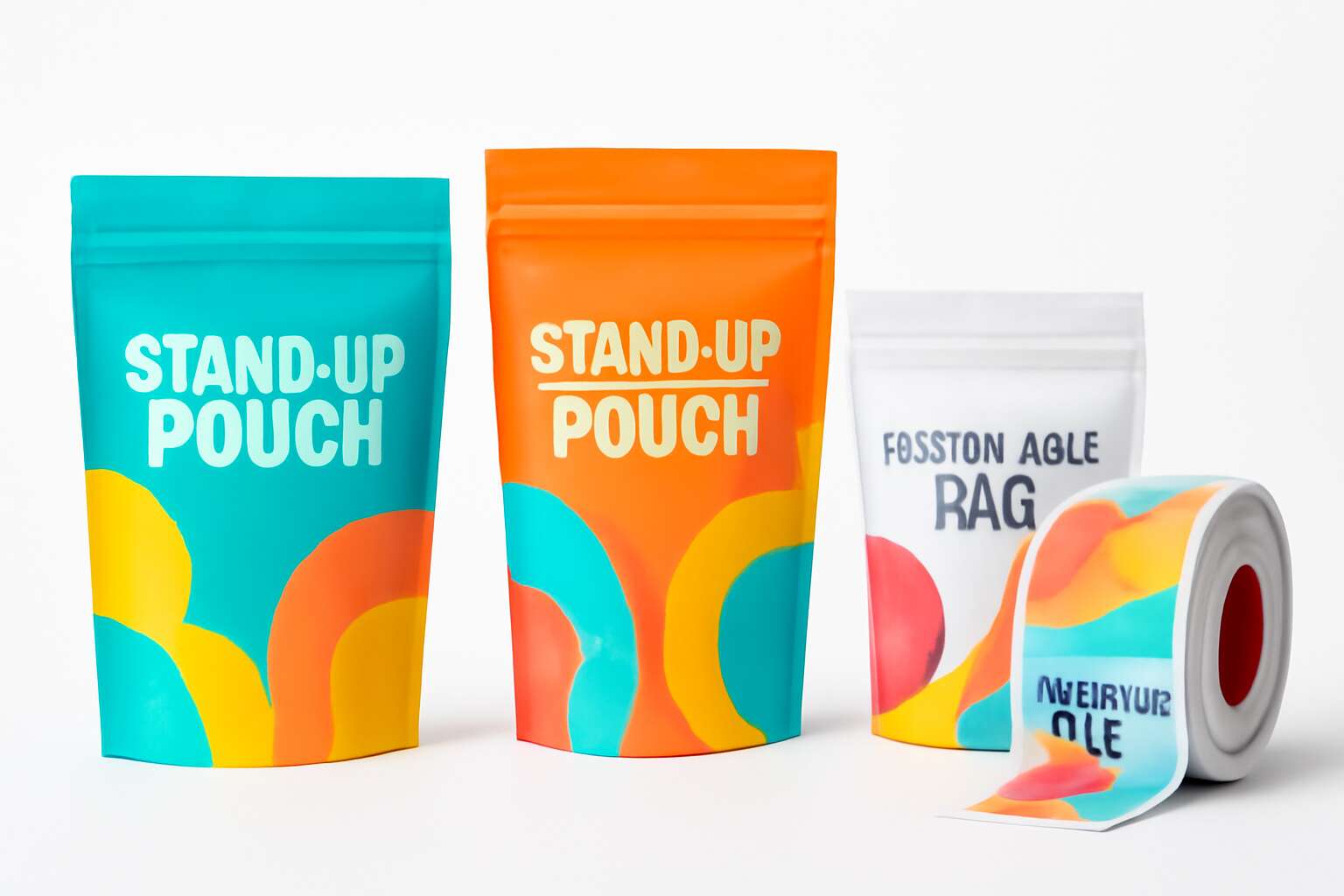
- Stand-up pouches for snacks
- Sachets for single serves
Key applications span food and beverage, personal care, and medicines, where lightweight, resealable formats reduce waste and boost the consumer experience.
Design segments emphasize stand-up formats, easy-open closures, and smart printing that supports sustainability and brand storytelling. Growth is driven by e-commerce, supply-chain efficiency, and demand for reduced material usage—delivering bold branding without bulk.
Branding, packaging design, and consumer experience
Flexible packaging is redefining shelf strategy. Global demand for this format rises 3–4% each year, outpacing rigid options. In South Africa and beyond, brands chase compact, vibrant designs that protect freshness from store to doorstep.
Market trends favor light, efficient packaging that speeds e-commerce and reduces material use. Applications span food and beverage, personal care, and medicines, enabling single-serve portions, travel kits, and lightweight medical consumables that withstand transit while preserving quality.
- Resealability and one-handed access
- Smart printing for authentic brand storytelling
- Tamper-evidence and safety cues
- Sustainability messaging and recyclability cues
Design branding and packaging design now hinge on bold visuals and tactile cues that enrich the consumer journey. Clear labeling, easy-open closures, and messaging about sustainability lift the experience across South Africa’s dynamic retail landscape. These shifts matter for local brands aiming to stand out on crowded shelves.
Applications across food, pharma, and non-food sectors
A pulse in the supply chain: flexible packaging grows 3–4% annually, outpacing rigid formats. In South Africa and beyond, brands favor lighter weights and compact forms that guard freshness from store to doorstep. E-commerce demands easy-open, resealable packs that travel well and trim material use.
Applications span food and beverage, pharma, and non-food sectors. Snack pouches, single-serve sachets, and travel-ready formats suit modern routines; in pharma, dose-accurate packs support adherence; and personal care and household goods benefit from leak-resistant designs that perform on shelves and in transit.
Design Applications: across food, pharma, and non-food, the goal is clear labeling, reliable closures, and practical aesthetics that aid use. For flexible packaging, function and form must align to protect contents and inspire confidence.
- Ergonomic closures for one-handed use
- Readable, high-contrast labeling
- Lightweight, recyclable material choices
Innovation in materials: bio-based, compostables, and barrier tech
Resilience is the new currency in packaging, and flexible packaging is growing at 3–4% annually. In South Africa and beyond, brands chase lighter weights and compact forms that guard freshness from warehouse to doorstep; e-commerce has made convenience non-negotiable.
Applications span food, pharma, and non‑food sectors, expanding with sustainable material choices.
- bio-based polymers
- compostable films
- advanced barrier coatings
Design innovation in materials redefines trust. Bio-based and compostable chemistries align with robust barrier tech to protect contents while supporting recyclability and end-of-life goals; the result is packaging that travels with purpose and sustains shelf appeal. What a time to witness materials science meeting daily life!
Logistics, shelf life, and supply chain resilience
Market trends pulse through factory floors: flexible packaging grows globally at 3–4% annually, with South Africa joining the momentum. Brands chase lighter weights, compact forms, and shelf-stable performance while e-commerce redefines convenience as non-negotiable.
- E-commerce-ready packaging formats
- Bio-based and compostable options expanding
- Barrier tech that preserves freshness longer
Applications span food, pharma, and non-food sectors, enabling portion control, tamper evidence, and travel-ready convenience. In South Africa, green credentials and recyclability are reshaping partnerships across the value chain.
Design logistics must align conversion speed with reliability, preserving shelf life while strengthening supply chain resilience. From substrate choice to coatings and inline metrology, every decision impacts performance and perception.
- Substrate selection balancing weight, rigidity, and barrier
- Coatings and laminates tailored to local climate and cold-chain needs
- Inline metrology and data-driven QA to prevent defects and delays
Future outlook and disruptive technologies
The global appetite for flexible packaging is expanding at 3–4% annually, with South Africa moving in step. Brands chase lighter gauges and compact formats that travel from shelf to doorstep with equal grace. The promise of reliability and sustainability is shaping investments on factory floors and in consumer storage choices.
Applications across food, pharmaceutical, and consumer sectors demonstrate how this packaging format enables portion control, tamper evidence, and travel-ready convenience—reducing waste, improving logistics, and elevating the shopper’s experience across diverse retail channels.
Design futures lean toward adaptive architectures and data-driven optimization—speed to market meeting durability and recyclability. New workflows connect design, testing, and manufacturing to shorten cycles.
- sensor-enabled freshness indicators
- RFID/NFC end-to-end visibility
- rapid prototyping via digital tooling



0 Comments