
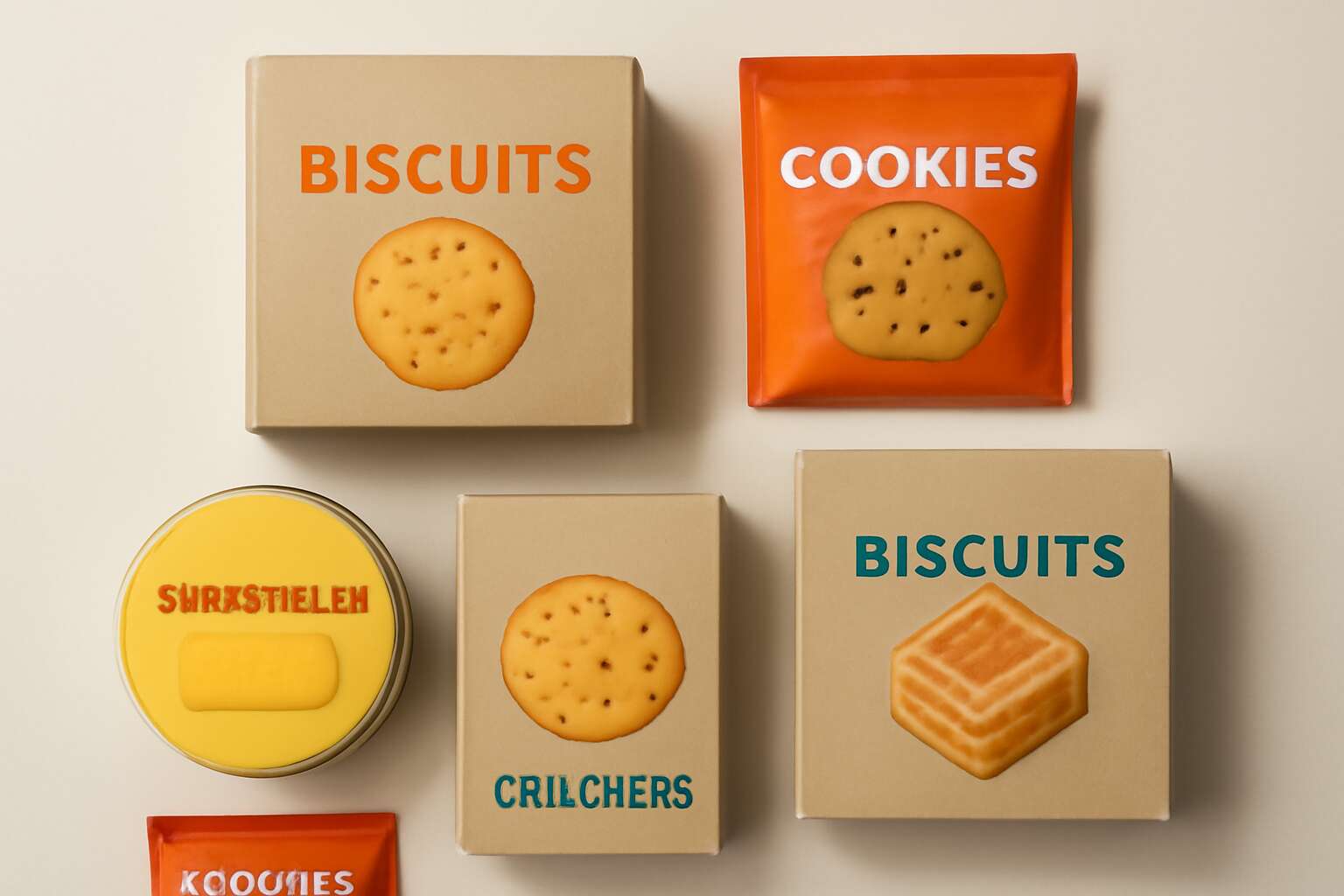
Material options and packaging mediums for biscuits
Paperboard and carton packaging for biscuits
In the quiet hours of the packaging line, the material you choose writes the biscuit’s fate. “The first bite remembers its cradle,” I’ve learned, and so paperboard and carton stand as the quiet sentinels—rigid, printable, and protective for South Africa’s bustling shelves.
Here are the core material options that align with modern biscuit making:
- Paperboard: a smooth, printable surface with just enough rigidity to hold shape during transit
- Carton (folding carton): sturdy, sealable, and premium-feeling for gift and festive lines
- Coatings and barrier treatments: biodegradable laminates or wax-free coatings that block moisture and fats while remaining recyclable in SA facilities
For a market-ready display, choosing paperboard and carton packaging for biscuits blends stability with storytelling—bold graphics, sustainable credentials, and a quiet assurance as a product travels from factory to family table, never compromising that first, beloved bite.
Plastic film barriers and laminates
A fresh stat from a SA consumer survey: 72% say packaging influences their biscuit choice, more than flavor or price. Plastic film barriers and laminates offer a light, protective cloak for the journey from bakehouse to basket. They seal in crispness, block moisture and fats, and keep shelf appeal under the bright lights of South Africa’s shelves. This is smart packaging for biscuits—quietly sturdy, endlessly printable, and tuned to modern logistics.
To tailor protection without weighing down the pouch, consider these film barrier options:
- Metallized PET for high moisture and aroma protection.
- OPP films for clarity and reliable seals.
- Biodegradable laminates blending PLA with barrier layers for compostable options.
In SA, recyclable laminates and wax-free coatings align freshness with sustainability, letting brands tell bold stories while ensuring the product travels confidently from factory to family table.
Metallized films and foil alternatives
Across South Africa, 72% say packaging influences biscuit choice, a hook that makes packaging for biscuits more than a wrapper—it’s the mile marker from bakehouse to basket. Metallized films offer a whisper-thin shield that blocks light, slows moisture, and preserves aroma, all without weighing the pouch down. They keep crisp edges intact while supporting bold printing under bright shelves.
Foil alternatives and film hybrids give manufacturers flexibility for long journeys and busy shelves. Think films that stay clear and seal reliably, or barrier papers that resist grease and stay recyclable.
- Metallized film options balancing barrier strength with printability
- Foil-free laminates and barrier papers designed for easy recycling
From rural co-ops to urban depots, these mediums carry biscuits with dignity on every road—from factory to family table.
Biodegradable and compostable packaging options
More than half of South African shoppers now prioritise eco-friendly packaging, reshaping how biscuits reach baskets and bakehouses alike. Biodegradable and compostable options are moving from novelty to norm, offering gentle fates for waste without compromising shelf life. From PLA to cellulose films and starch blends, these materials balance barrier needs with conscience, shaping durable, crinkle-free packaging for biscuits while inviting responsible disposal.
- Biodegradable plastics such as PLA and PHA films that break down in industrial composting
- Compostable barrier papers and cellulose films that resist grease
- Starch-based laminates and bagasse fibre options for wraps and trays
- Natural fibre composites and mycelium-based packaging for premium lines
From rural co-ops to urban depots, these choices carry biscuits with dignity along every road.
Sustainability and eco-friendly packaging strategies
Recyclability and end-of-life considerations for biscuit packaging
“Sustainability isn’t a trend, it’s a design constraint,” a designer once told me, and in the realm of packaging for biscuits, that constraint becomes a compass. South Africa’s markets demand materials that harmonize with local waste streams, not merely with glossy ideals. End-of-life realities shape how brands are perceived long after the last crumb is tasted.
Recyclability can’t be an afterthought; it rests in the choices we make about barriers, inks, and separability within the cabinet of consumer behaviour. In SA, clear labelling and compatibility with municipal systems are as vital as aesthetics. The smartest biscuit packs anticipate the journey beyond the shelf, aligning with community recycling capacities and offering straightforward messages about disposal. This is true for packaging for biscuits, where recyclability shapes brand trust.
Ultimately, sustainability becomes a quiet promise customers feel in their hands—durable, responsible, unmistakably human!
Using recycled content and responsible sourcing
Shoppers across South Africa respond to packaging they can trust, not merely what looks glamorous. A recent survey places loyalty for packaging at 68%, hinging on clear disposal messages and ethics. “Sustainability isn’t a trend—it’s a design constraint!” declares a designer, shaping decisions that travel from shelf to home.
Using recycled content and responsibly sourced materials makes a difference. FSC-certified paperboard, post-consumer waste cardboard, and films with higher recycled content can protect freshness while respecting waste streams. This matters for packaging for biscuits. In SA, transparent sourcing and low-impact inks reinforce trust in the product.
Considerations that travel beyond the shelf:
- Recycled content that preserves barrier and shelf life
- Responsible certifications like FSC and traceable supply chains
- Low-VOC inks and food-safe coatings
These choices speak in the silence between the biscuit and the consumer.
Reducing plastic use through design innovation
Across South Africa, packaging for biscuits that speaks plainly about care earns trust—and shoppers notice. A recent survey shows 68% loyalty to brands that communicate disposal messages clearly, reminding readers that sustainability is a design constraint, not a trend.
Reducing plastic use begins in the drawing room, where design innovation trims weight, simplifies closure, and clarifies end-of-life. By reimagining geometry and print, packaging for biscuits protects freshness while weaving a responsible message into every seam. In this spirit, packaging for biscuits becomes a quiet ambassador of stewardship, inviting consumers to recycle without guesswork.
- Reimagined shapes and closures that minimize material while keeping freshness intact
- Clear, prominent disposal cues that guide end-of-life decisions
- Light-touch coatings and inks that maintain safety without adding complexity
These choices become the bridge between shelf and home, a story spoken softly between biscuit and buyer.
Certifications and labeling for sustainability claims
Sustainability sells when the claims cut through the noise. A recent survey shows 68% loyalty to brands that communicate disposal messages clearly, and that trust travels from shelf to home through packaging for biscuits that proves its promises.
- FSC or PEFC wood fiber for paperboard
- SABS or credible national ecolabels
- ISCC Plus for bio-based or recycled content
- EU Ecolabel where applicable
- Local recyclability verification from curbside programs
Certifications and labeling are the quiet engines behind credible claims. Choose third-party verifications that align with local standards in South Africa—every mark should be verifiable by a consumer with a quick scan.
Visible, honest labels help consumers navigate disposal and recycling, turning sustainability claims into everyday action—the packaging becomes a beacon of stewardship, steady as a lighthouse in a fog of misinformation.
Design, branding, and packaging aesthetics
Brand storytelling on biscuit packaging
In the realm of packaging for biscuits, design, branding, and packaging aesthetics are the trifecta that keep your product from vanishing into the biscuit aisle void on South African shelves. Studies say it takes just 3 seconds to form a first impression—so a crisp logo, a readable typeface, and a color story that feels ‘local and trusted’ can spark a purchase.
Brand storytelling on biscuit packaging is where craft meets appetite. Let the visuals whisper heritage, craft, and care. A single, well-executed narrative can turn a simple cookie into a memory.
- Color palette signaling flavour and origin
- Typography with legibility and personality
- Motif consistency across lines for brand recall
Typography, color psychology, and shelf impact
On South African shelves, packaging for biscuits must speak in a heartbeat—three seconds is all the time you have to win a glance. Design, branding, and packaging aesthetics form a trifecta that keeps a biscuit from vanishing in the aisle void. A crisp logo, a readable typeface, and a color story that feels local and trusted spark a purchase, turning a simple cookie into a shared memory.
- Typography that balances clarity and character across sizes
- Colour cues that hint at flavour and heritage
- Consistent motifs weaving lines into a recognisable brand
Typography and Colour psychology shape shelf impact, guiding the eye and perception. I notice that a humanist sans feels approachable; a restrained serif hints craft. Warm browns and greens signal indulgence and authenticity, while high-contrast type stays legible from afar. The goal is a cohesive presence that travels from sleeve to stand and becomes recognisable at a quick glance.
Graphic design, imagery, and packaging graphics alignment
On South African shelves, a biscuit’s first breath is a glance. In SA, shoppers decide in 2.5 seconds, so packaging for biscuits must be instantly legible, evocative, and trustworthy. Design, branding, and packaging aesthetics are not separate; they form a seamless envelope that carries your story. A crisp logo, a readable typeface, and imagery that nods to local tastes become recognisable at a quick glance.
Graphic design, imagery, and packaging graphics alignment ensure the tale travels from sleeve to stand with the same cadence.
- Unified visual system across formats
- Imagery that hints at flavour, heritage, and texture
- Clear brand marks that stay legible on shelves and screens
Let the color skip between rich browns and greens; let typography keep pace as sizes switch; let the whole package feel like a memory waiting to be shared. In this way, the packaging becomes more than wrap—it becomes a doorway to moments.
On-pack labeling, allergen and nutrition visuals
On South African shelves, a glance becomes a decision—2.5 seconds is all the time a biscuit has to spark a memory. Design, branding, and packaging aesthetics fuse into one seamless envelope that carries your story. A crisp logo, a readable typeface, and imagery that nods to local tastes become recognisable at a quick glance. This is how packaging for biscuits becomes a doorway to moments!
On-pack labeling, allergen and nutrition visuals demand both clarity and charm. Consider these anchors:
- Clear allergen indicators that remain legible on every size of pack
- Nutrition visuals aligned with local regulations and quick reads
- Brand marks that hold their legibility on shelves and screens
Let the packaging be a memory waiting to be shared—a tactile invitation that doesn’t shout, it hums. I’ve watched it transform humble biscuits into little rituals, and that is the glamour of thoughtful design.
Tamper-evidence, convenience features, and user experience
Design, branding, and packaging aesthetics are not mere adornments—they are a handshake with the shopper. In a crowded South African aisle, a crisp logo, legible type, and tactile finishes fuse into memory. That memory arrives in a flash: a glance, a moment of recognition, a decision. Packaging for biscuits carries your story in a single envelope, and the right balance of texture and colour can turn a simple biscuit into a small everyday ritual.
Key design choices that reinforce tamper-evidence, convenience features, and user experience include:
- Tamper-evident closures that read clearly and seal reliably—without fuss
- One-handed openings and intuitive icons for quick use
- Smart reclosure and easy-to-read information on every pack size
I’ve seen packaging spark moments of delight as it hums softly rather than shouting. It’s the quiet art of design that invites touch, sustains freshness, and travels with a memory—a biscuit ritual shaped by thoughtful packaging.
Regulatory, safety, and compliance considerations
Food contact materials regulations and approvals
Regulatory clarity keeps biscuits safe from field to shelf. In South Africa, food contact materials must meet safety standards and carry traceable approvals before they reach the market. Compliance isn’t optional—it’s a competitive edge that keeps brands confident. When you talk about packaging for biscuits, migration limits and material safety data factor into every decision.
- Verify that the material is food-grade and approved for contact with baked goods.
- Secure migration test results and supplier declarations showing compliance with local limits.
- Compile a regulatory dossier and establish audit-ready records for SA authorities.
Documentation should cover use conditions, storage, and end-of-life handling. All labeling must reflect true allergen and ingredient information, protecting consumers and your brand. For packaging for biscuits, ongoing monitoring of supplier compliance and changes in regulations keeps products safe and trusted.
Allergen labeling and dietary information requirements
Compliance is the quiet engine behind every honest biscuit on a shelf. In South Africa, packaging for biscuits must meet safety standards and carry traceable approvals before they reach the market.
Allergen labeling and dietary information are not afterthoughts but the contract you keep with your customers. To meet these demands in SA, ensure every ingredient and possible allergen is disclosed clearly.
- Verify food-grade status and contact approvals
- Secure migration results and supplier declarations
Documentation should cover use conditions, storage, and end-of-life handling. All labeling must reflect true allergen and ingredient information, protecting consumers and your brand. Ongoing monitoring of supplier compliance and regulatory changes keeps products safe and trusted.
Nutritional labeling and regulatory placement on packs
Compliance is the quiet engine behind every biscuit that bears a trustworthy name — the gatekeeper of flavor’s promise. In South Africa, packaging for biscuits must satisfy safety standards and carry traceable approvals from factory to shelf. A recent survey shows 7 in 10 shoppers trust brands that spell out the facts clearly and consistently!
Regulatory placement and nutritional labeling are the architecture of honest packaging. The Nutrition Information Panel (NIP) is mandatory, typically on the back or side, with values per 100 g and per serving where relevant. Front-of-pack claims must be clear, accurate, and aligned with the ingredient deck and approved regulatory language. In practice, I see front-of-pack clarity turning cautious shoppers into confident customers.
Within this framework, consider these regulatory touchpoints:
- NIP placement and legibility across SA packaging regulations
- Multilingual labeling to meet diverse consumer needs
- Batch codes, expiry dates, and storage instructions for traceability
Cost efficiency, supply chain, and packaging optimization
Material cost optimization and supplier selection
Margins hinge on the unseen cost of packaging waste; as a packaging director notes, “Every gram saved is a step toward a healthier bottom line.” For packaging for biscuits, the craft is trimming weight without compromising shelf life.
In South Africa, supply chain agility matters as much as the recipe. Material cost optimization and supplier selection shape packaging performance from factory to shelf, with regional converters and flexible stock plans cutting delays and boosting reliability.
Key levers include:
- Consolidating orders with regional suppliers to cut freight and mitigate delays.
- Standardising sizes and recyclable laminates to reduce tooling and waste.
- Building long-term supplier partnerships for predictable pricing and quality.
By aligning supplier capabilities with regional logistics, brands unlock smoother cycles and sharper margins—without sacrificing the sensory appeal that makes biscuits irresistible!
Packaging line efficiency, automation, and changeovers
South Africa’s supply chains know how to dance, especially when biscuits are on the line. A lean margin tip: trimming packaging waste by 10% can lift profits by a few percentage points—proof that every gram matters in packaging for biscuits.
Cost efficiency hinges on three practical levers:
- Consolidation of orders with regional suppliers to cut freight and mitigate delays.
- Standardisation of sizes and recyclable laminates to reduce tooling and waste.
- Long-term supplier partnerships for predictable pricing and quality.
By aligning supplier capabilities with regional logistics, brands unlock smoother cycles and sharper margins from factory to shelf. Packaging line efficiency, automation, and changeovers are more than buzzwords; they’re the quiet gears that keep biscuits crisp, shelf-ready, and lovable on a slow Monday morning.
Waste reduction, recycling programs, and lean packaging
Across South Africa’s biscuit lines, packaging for biscuits is the quiet engine of profit. A 10% trim in packaging waste can lift margins by a few percentage points, proving that every gram matters. Cost efficiency hinges on three levers: regional order consolidation, standardising sizes and laminates, and long-term supplier partnerships. When supplier capabilities align with local logistics, factory-to-shelf cycles become smoother and margins sharper.
- Weight reductions and standard substrates to cut waste
- Recycling programs that close the loop
- Lean changeovers to speed SKU transitions
In South Africa, packaging for biscuits must stay crisp on shelves and cost-conscious, a quiet poetry that travels from the factory floor to the consumer’s hand.
Lifecycle cost analysis and ROI for packaging decisions
Margins slip through the seams of packaging for biscuits, where every gram and every choice can punch above weight on South Africa’s shelves.
Lifecycle cost analysis reveals that the cheapest option today may sabotage tomorrow’s margins through waste or obsolescence. ROI hinges on durability, compatibility, and end-of-life handling.
In a quick framework, consider these lifecycle cost elements:
- Acquisition cost and unit price
- Delivery, handling, and storage
- Waste, scraps, and end-of-life management
- Shelf-life impact and product protection
- Rework, returns, and downtime costs
In the South African market, speed and reliability matter as much as taste. The ROI math travels from plant to plate with quiet precision, aligning supply, brand, and customer trust.



0 Comments