
Biodegradable and Compostable Materials
Plant-Based PLA Plastics
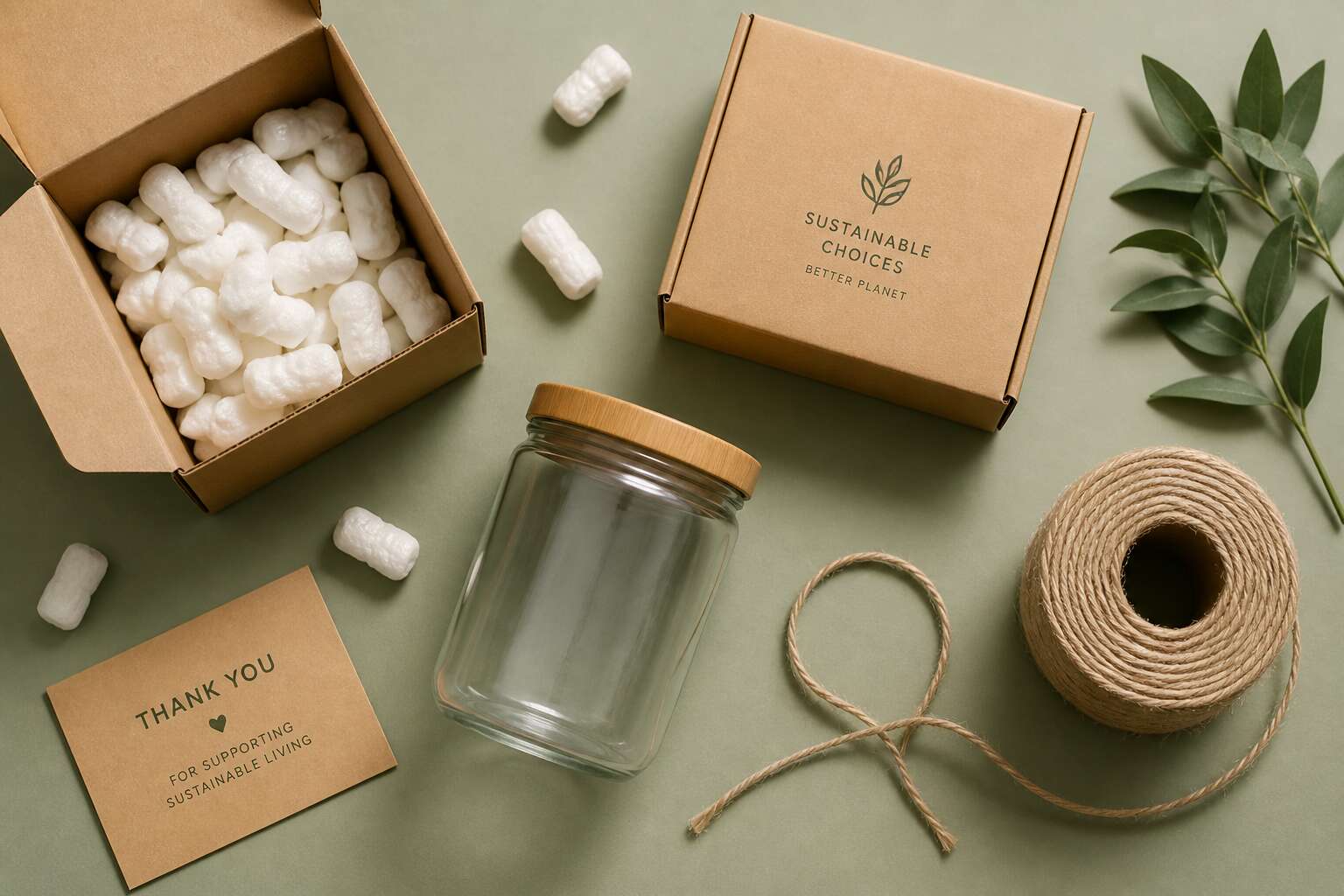
Plant-based PLA plastics begin as fermented plant starch, usually maize or sugarcane. A single bottle of polylactic acid looks and performs like petroleum plastic. Breaking it down requires different conditions. PLA needs industrial composting, sustained heat around 60 degrees Celsius, and specific microbial activity. Home compost bins rarely deliver that environment.
South African businesses weighing green packaging examples should understand this infrastructure gap. Without commercial composting facilities nearby, PLA can linger in landfills just like conventional plastic. Hydrolytic degradation only accelerates when environmental factors align.
Applications fit particular niches:
1. Clear cold food containers
2. Cutlery with short shelf life windows
3. Single serve cold drink cups
These uses exploit PLA’s clarity while accepting its temperature limitations. The material is gaining ground, but it is not a standalone solution for packaging waste.
Mushroom Root Packaging
Few packaging innovations feel as counterintuitive as mushroom root packaging. Mycelium, the vegetative network of fungi, grows around cleaned agricultural waste such as hemp or maize stalks. The result is a dense, lightweight composite that binds without synthetic glues. Producers cultivate this material into custom moulds over about a week, creating protective shapes for fragile goods. While this process requires energy for drying and heat treatment, the input waste is often free. Local breweries and farms generate ample husks and stems that otherwise go to landfill. These packaging examples offer a genuine circular model for South African industries, particularly wine exporters and electronics distributors. The final product is biodegradable in soil or home compost within 45 days. It also resists moisture and impact Surprisingly well.
Common applications include:
– Protective corner brackets for appliances
– Cradle inserts for bottled beverages
– Void fill for shipping cartons
The material breaks down without leaving microplastic residue, which gives it an edge over many biodegradable polymers. Its production scale remains limited, though interest from logistics hubs in Gauteng and Cape Town is growing. For brands seeking green packaging examples, mycelium presents a tangible shift toward regenerative systems.
Edible Wrapper Films
Seaweed films wrap millions of single serve products across Asia, yet South African brands have barely touched this category. Edible wrapper films are thin membranes made from hydrocolloids such as agar, carrageenan, or fruit pectin. They dissolve in water or can be eaten.
The process involves casting a liquid starch blend into sheets, then drying them into flexible films. I have seen prototypes carrying flavour, colour, or probiotic cultures! These films suit burger wrappers, noodle sachets, and coffee stirrer sleeves.
Common applications include:
- Seasoned burger wrappers that replace sauce packets
- Spice films for instant meals
- Coffee creamer pouches
These green packaging examples eliminate the disposal step. For South African food chains, they reduce organic waste while giving customers a novel experience. Cost and shelf life remain hurdles, though Cape Town kitchens are testing it. The category is young, yet these green packaging examples point to a different relationship with waste.
Compostable Injection Molded Products
Injection molding defines modern packaging. The process forces molten biopolymers into precision tools, shaping everything from cutlery to jar lids. In South Africa, local converters now produce compostable injection molded products that break down in commercial facilities within 90 days. I have handled these parts at a Midrand trade show; the hinge strength and surface finish match conventional plastic.
These green packaging examples work for:
- Disposable cutlery for fast food chains
- Rigid containers for deli counters
- Caps and closures for beverage brands
Compostability depends on industrial infrastructure, which Johannesburg and Durban are expanding. The materials use PBAT blended with starch or PHA from bacterial fermentation. They pass fatigue tests and heat resistance checks.
Recycled and Recyclable Packaging Systems
Post-Consumer Recycled Paper Board
South Africa recovers over 70% of its paper and paper packaging each year, a figure that quietly redefines our understanding of a material’s lifespan. Post-consumer recycled paperboard challenges the linear thinking that ends at the recycling bin. The physical cycle is straightforward: collected waste paper is re-pulped, cleaned, and reformed into a new structural material. Yet the deeper implications are psychological. Every fibre in a cereal box or shoe box carries a previous life, a previous function.
This system works when we accept a level of variability in the final product. The aesthetics shift, the texture becomes richer, and the colour is less predictable. I find this unpredictability a quality, not a flaw. We are unlearning the sterile perfection of virgin materials.
The efficiency of this packaging hinges on a clear hierarchy of use. The recovery of a single box depends entirely on the habits of the household. The calculation is simple, and the responsibility is shared across the value chain. This is where the practical value of such packaging systems becomes clear.
– It reduces the energy required for manufacturing by up to 50% compared to virgin pulp.
– It diverts significant volumes of waste from the country’s landfills.
– It maintains the structural integrity needed for dry goods and transit packaging.
The best example of this in a corporate context is the shift from multi-material laminates to monomaterial paperboard. When a brand chooses a recyclable coating over plastic lamination, they are making a statement about the product’s end of life. The packaging is not a one-way vessel; it is a resource for the next cycle. Ultimately, green packaging examples emerge not from novelty, but from a disciplined commitment to closing the loop on what we already have.
Mono-Material Flexible Pouches
Flexible pouches have long been a landfill problem because of their laminated layers. A mono-material pouch, by contrast, uses a single polymer such as polyethylene, which allows the entire structure to be recycled without disassembly. In South Africa, where waste sorting infrastructure varies by municipality, this simplicity offers a practical route to recovery.
The psychological shift here is subtle. We have learned to accept flexible packaging as a convenience, yet its afterlife rarely crosses our minds. Mono-material designs force us to reconsider that assumption. The pouch becomes one of the green packaging examples that reward careful handling at the curb.
- It reduces the energy footprint of sorting.
- It enables closed loop film recycling.
- It preserves barrier properties for dry goods.
This system does not solve every problem, but it narrows the gap between consumer intent and industrial capability.
Aluminum and Glass Infinite Loop Recycling
Aluminum and glass can be recycled forever. In South Africa, a glass bottle returns to the furnace, then to the shelf, often within weeks. Aluminum cans follow the same closed loop, losing none of their strength. These systems are durable green packaging examples because the material never degrades.
Consider the journey:
- A can is crushed, melted, and rolled again.
- A jar is collected, sorted, and remelted.
- Both save significant energy versus virgin production.
This cycle rewards municipalities that invest in collection. For consumers, the act of rinsing and sorting becomes a small ritual with measurable impact. We rarely see the loop, but we trust it. That trust makes a truly circular economy possible.
Reusable and Refillable Container Models
Refillable Cosmetic Jars and Vials
Here is the awkward truth about the beauty industry: many products are sold in containers engineered to be thrown away. Refillable cosmetic jars and vials work differently. You buy the vessel once, often in thick glass or sturdy aluminium, and then purchase a lighter refill. These green packaging examples reduce the material footprint per use considerably.
Common refill formats include:
- Pump bottles with replaceable inner cartridges
- Cream jars that accept foil-sealed refill pods
- Roller vials with reusable outer sleeves
Refill systems demand consumer compliance. A jar only stays out of the landfill if you actually buy the refill, which is a bigger commitment than most brands admit! South African shoppers have adopted this model in premium skincare ranges, though the convenience of a fresh pump bottle remains tempting. The success of these green packaging examples depends on habit as much as design.
Circular Shipping Boxes with Return Programs
The uncanny orbit of a delivery box rarely ends at the doorstep. Circular shipping boxes are engineered to begin another journey the moment the parcel is opened. These returnable containers, built from rugged corrugate or durable polypropylene, are designed to withstand a dozen trips or more.
The model requires a closed logistical loop. After unpacking, the customer folds the vessel flat and drops it at a designated collection point. This active participation transforms a single purchase into a recurring resource. The logistics of retrieval are demanding, yet the return on material savings is definitive.
For South African e-commerce ventures, this system offers a visible shift from disposability. A reusable crate or box used even ten times eliminates the need for nine single-use counterparts. The fabric of the transaction changes; the packaging becomes an asset rather than an expense.
Here is the usual cycle:
- The merchant ships goods in a durable, reusable container.
- The recipient unpacks and returns the empty box via a drop-off network.
- The box is inspected, sanitised, and re-enters the inventory for another voyage.
This approach is gaining traction in local retail for high-volume goods like electronics and premium apparel. It is a direct antidote to the one-way trade of cardboard. These green packaging examples demonstrate that a package can carry value beyond its initial contents.
Deposit-Based Glass Bottle Reuse Networks
A returnable glass bottle can complete 25 trips before it is decommissioned. That durability underpins deposit-based glass bottle reuse networks, where the consumer pays a small deposit at the till and reclaims it when the empty bottle is dropped back at a participating retailer.
This is not nostalgia, it is a functioning example of reverse logistics. Washing and refilling costs a fraction of the energy needed to melt glass and form it anew. For South African craft breweries and dairy farms, this closed loop trims packaging spend and raw material dependence. That is a saving worth repeating!
Green packaging examples like these reframe the container as an asset in circulation, not a disposable afterthought. The cycle works as follows:
- Producer fills and caps a reusable glass bottle.
- Retailer adds a refundable deposit to the price.
- Consumer returns the empty bottle for a refund.
- Producer collects, sanitises, and refills the bottle.
Modular Packaging for Home Care Products
South African households discard millions of plastic trigger sprayers each year. Modular home care systems break this cycle. A single durable trigger head pairs with concentrated refill cartridges. One head survives dozens of refills.
- Refill cartridges use 80% less plastic than single-use bottles.
- Retailers offer bulk dispensers for liquid concentrates.
- Consumers return empty cartridges for sanitisation.
These green packaging examples demonstrate how design can shift consumer behaviour. When the container becomes a permanent fixture, packaging volume drops sharply. The refill pouch replaces the bottle entirely.
Smart RFID-Enabled Reusable Crates
The average South African retailer loses a significant portion of fresh produce to damage and spoilage before it ever reaches the shelf. Our collective habit of treating packaging as a disposable afterthought is a primary culprit. The solution lies not in better materials alone, but in smarter systems. Reusable and refillable container models challenge the very notion of a single-use journey. They demand a shift in logistics, requiring businesses to manage a return flow, yet the payoff in reduced waste is substantial.
Consider the humble crate. It has quietly transported goods for decades, but its potential is only now being fully realised through technological integration. In this model, the crate is no longer just a box. It becomes a tracked asset, maintained and cleaned for continuous cycles. This is fundamentally different from the recycling loop; the energy is spent on circulation, not reprocessing. These green packaging examples show how infrastructure can outperform material science alone.
To see this in action, look at the pooled crate system used by major fresh produce suppliers. The system operates on a simple, circular principle:
1. Standardised, durable crates are pooled and shared among multiple growers.
2. Retailers return the empty crates to a central facility.
3. The facility sanitises and inspects the crates before redeploying them.
4. A single crate may serve this cycle for over ten years.
The inefficiency of the old system was quiet but costly. Cardboard boxes were strong enough for one trip, but vulnerable to moisture and stacking pressure. The reusable model solves this every day. However, the most compelling development is the arrival of smart RFID-enabled reusable crates. These crates carry a small tag that communicates with warehouse sensors.
This technology does more than track location. It monitors temperature and humidity, providing real-time data on the condition of the produce inside. It allows retailers to pinpoint exactly where a delay occurred in the supply chain. For the consumer, it means a fresher product. For the business, it cuts waste. These are not abstract ideals. They are practical, measurable improvements. The crates themselves are a permanent part of the supply chain, not ephemeral trash. By elevating the container to a durable, intelligent asset, we stop managing waste and start managing efficiency. This is what truly sets these green packaging examples apart.
Minimalist and Zero-Waste Pack Design
Water-Soluble PVA Sachets
The average shampoo sachet takes centuries to decompose, yet it is used for exactly one shower. That is the kind of absurdity that keeps me awake at night. Enter water-soluble PVA sachets, the packaging that disappears once the job is done.
These films dissolve in water. They leave no microplastic residue. The sachet holds a pre-measured dose of detergent or soap. You toss the whole thing into the washing machine, and it vanishes. No scissors, no sticky residue, no guilt. As green packaging examples go, this one stands out!
Solid Concentrate Bars Without Containers
Here is the content, flowing directly from the discussion on PVA sachets.
The fight against waste often moves from the molecular to the monumental, but sometimes the most profound shift is the simple removal of a container. We have traced materials that dissolve and structures that biodegrade, yet a quieter revolution lies in objects that require no vessel at all. The solid concentrate bar strips away the outer layer entirely, questioning why a product needs a home if the product itself is the entire solution.
Consider the humble shampoo bar. It bypasses the need for a PET bottle, a label, a shrink-wrap seal, and a secondary carton. This is not a swap of one polymer for another; it is a structural deletion of packaging layers. The same logic applies to dishwashing blocks and laundry strips, where a single compressed square handles the workload of a full liquid bottle. For South African consumers navigating local recycling schemes, this erases the burden of sorting a mixed-material item that might end up in a landfill anyway.
This design philosophy rewards the user with a lighter footprint and a cleaner bathroom shelf. It also reduces transport emissions, since a truck filled with bars carries product rather than water weight. When we consider the full lifecycle, these bars function as potent green packaging examples because they redefine the parameter of what packaging is. They are the ultimate expression of minimalism, where the product and the package are one and the same entity.
– A solid deodorant bar removes the plastic push-up stick.
– A dish block eliminates the need for a trigger spray bottle.
– A conditioner bar skips the need for a squeeze tube entirely.
The logic is disarmingly straightforward: if you remove the container, you remove the waste. The ritual changes too. You do not pump, squeeze, or spray; you rub, lather, and rinse. The connection feels more direct, more tangible. This approach does not rely on clever chemistry to break down materials after disposal; it relies on clever design to avoid the need for disposal altogether.
Upcycled Agricultural Waste Shipping Inserts
Removing the container forces a question: what happens to materials that still need protection during transit? A glass jar still requires cushioning. Upcycled agricultural waste shipping inserts rank among the green packaging examples that answer that need. Stalks, husks, and bagasse are compressed into forms that replace polystyrene foam and bubble wrap.
South African farms generate tonnes of these fibrous residues each season. Redirecting them into protective packaging serves two purposes. The waste avoids open-air burning or landfill, and the insert breaks down naturally after use. Minimalist design trims unnecessary layers from the outer box.
- A single corrugated sheet with printed graphics replaces a printed sleeve and plastic wrap.
- Tabs and folds replace adhesive tape.
- Avoiding lamination keeps the whole unit recyclable.
These are practical green packaging examples that work with existing logistics. The compostable insert can be discarded with garden waste. That matters in a country where recycling infrastructure varies by municipality.
Renewable Plant Fiber Alternatives
Hemp and Bamboo Composite Trays
Hemp and bamboo grow quickly, and they make strong composite trays. A hemp fiber composite can be three times stronger than steel per unit weight. That is a surprising fact, but the data holds. Bamboo matures in three to five years. Hemp takes months. Both are abundant in South Africa.
These trays are compelling green packaging examples. They use the whole stalk, so production creates little waste. The material is light, durable, and renewable. It resists moisture and handles temperature shifts without cracking.
We have tested these trays with fresh produce, and they hold up well. What makes this option practical?
- Supply chains are short, especially near KwaZulu-Natal bamboo farms.
- With a biopolymer binder, the trays fully compost in industrial facilities.
- They do not shatter when dropped, unlike many bioplastics.
The trays return carbon to the soil instead of leaving microplastics behind. That is a clean loop.
Sugarcane Bagasse Clamshells
Sugarcane bagasse clamshells are proving to be one of the most pragmatic green packaging examples for South Africa’s food service sector. After the cane is crushed for juice, the leftover fibrous pulp would traditionally be burned. Instead, that pulp becomes a sturdy container that handles both hot and cold food. It is a direct and efficient use of an agricultural byproduct that already exists in massive quantities across KwaZulu-Natal and Mpumalanga. The material does not compete with food crops, which makes it a responsible choice.
Bagasse clamshells have a distinct advantage over some other plant-based materials because they do not require a complex chemical breakdown process. The fiber holds its shape well, even when laden with saucy curries or juicy fruit salads. The texture absorbs excess moisture, so your food does not sit in a puddle. These clamshells are also versatile. You can find them in small snack sizes or large meal portions.
Consider what these containers offer in daily use:
1. They have a high heat tolerance, safe for hot fill and reheating.
2. They are freezer safe, which extends the shelf life of prepared meals.
3. They close securely to prevent leaks during transport.
4. They are microwave friendly for quick customer convenience.
The real value, however, lies in their disposal. When these clamshells end up in an industrial composting facility, they break down fully in under 90 days. They return valuable organic matter to the soil, turning a single-use item into a resource. For restaurants and takeaways in South Africa looking to reduce their footprint without sacrificing durability, this option is both accessible and effective. It represents a step away from petroleum-based packaging and toward a circular system that makes sense for local supply chains.
Seaweed-Based Edible Sachets
Seaweed based edible sachets offer a different solution to the packaging problem. These thin membranes hold liquids like sauces or dressings. You can eat the sachet or let it biodegrade. For South Africa’s coastal communities, kelp and other seaweeds are abundant. Harvesting them for packaging creates an economic opportunity while addressing plastic waste.
The production process is refreshingly straightforward. Seaweed is washed, blended, and cast into films. No complex chemicals are needed. The resulting material is strong enough to hold a single serving of olive oil or vinegar. It dissolves quickly in water or can be consumed directly.
Here are some practical benefits:
- They are fully edible, so there is zero packaging waste in certain contexts.
- They can be flavored to complement the food inside.
- They break down naturally in marine environments.
These green packaging examples show how renewable resources can replace petroleum based sachets without sacrificing convenience.
Wheat Straw Rigid Containers
Wheat straw rigid containers turn agricultural residue into durable packaging. After wheat is harvested, the straw is often burned or discarded. Instead, manufacturers compress the fibers with heat and pressure to form sturdy boxes, trays, and clamshells. The result holds its shape through shipping and refrigeration, yet breaks down in industrial composting facilities.
These containers offer a practical path for South African food producers. They feel like plastic but behave like paper waste. No new farmland is needed, since the straw is a byproduct. This makes wheat straw one of the more honest green packaging examples, because it uses material that already exists.
Consider how they perform:
- They resist grease and moisture better than plain cardboard.
- They are lightweight, reducing transport emissions.
- They can be printed with water based inks.


0 Comments